Veneers vs Crowns Concord CA: Choosing the Right Smile Restoration for Your Needs
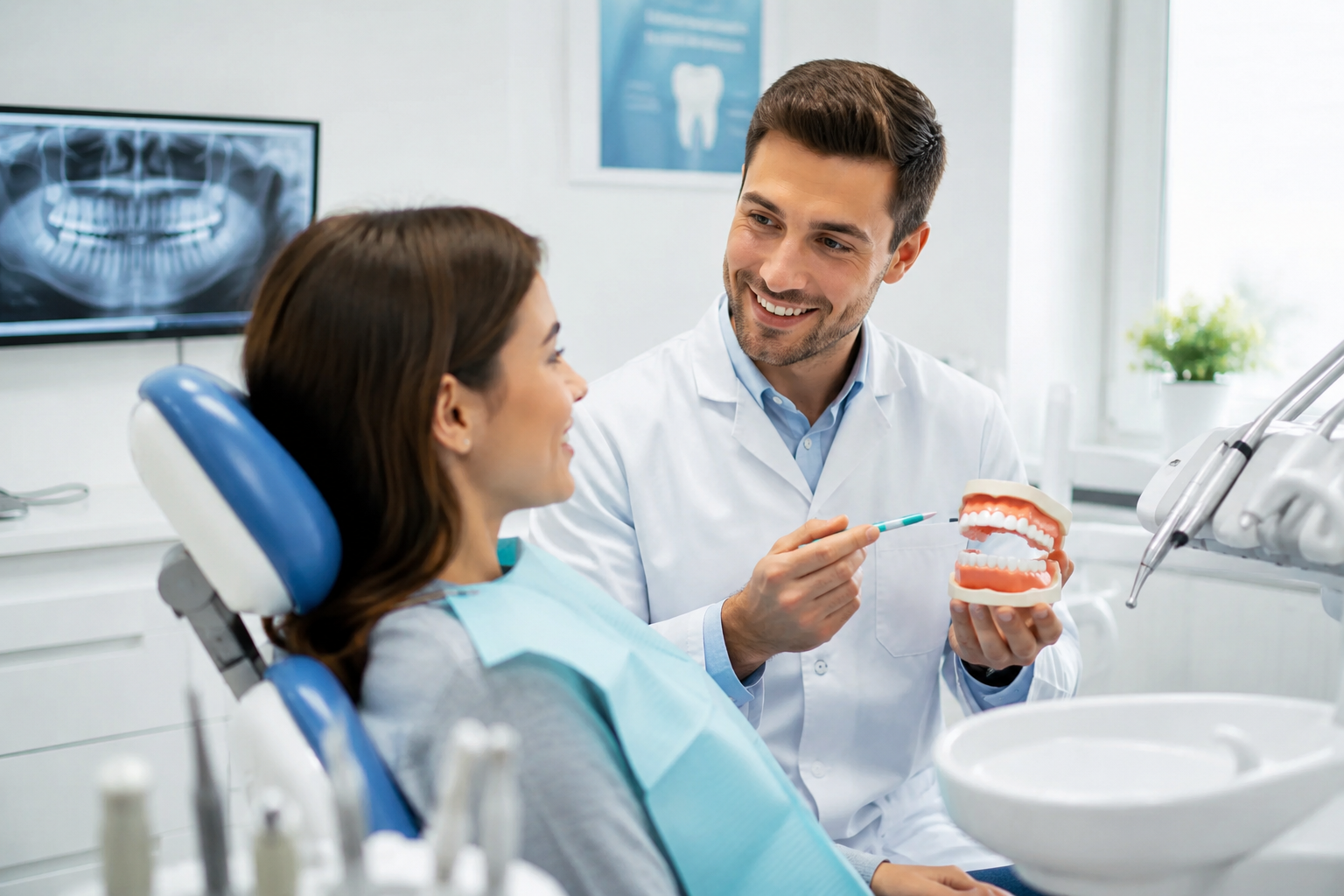
Choosing between veneers and crowns in Concord, CA affects both how your smile looks and how long the fix lasts. Veneers often suit front-teeth cosmetic concerns with minimal removal, while crowns cover and strengthen damaged teeth — pick the option that matches whether you need appearance-focused improvement or structural repair.
A local dentist can explain the treatment steps, expected results, and cost differences so you know what to expect from consultation to final placement. Expect this article to walk through how each option works, comparisons of procedure and longevity, Concord-specific cost considerations, and how to decide which approach fits your goals.
Veneers reshape the front surface of teeth to correct color, shape, size, and minor alignment issues. They require less tooth removal than crowns and can deliver dramatic aesthetic improvement with predictable results.
Veneers cover the visible front of teeth to mask stains that don’t respond to whitening, close small gaps, and lengthen worn or short teeth. Porcelain veneers resist staining and mimic light reflection of natural enamel, which helps achieve a lifelike appearance.
The procedure usually takes two to three visits: consultation and planning, tooth preparation and impressions, then bonding of the finished veneers. During preparation a thin layer of enamel (often 0.3–0.7 mm) is removed to ensure a natural fit and comfortable bite.
Veneers also address minor alignment problems when orthodontics would be unnecessary or when patients want faster cosmetic change. They do not replace missing teeth or fix significant bite problems; those situations may need crowns, implants, or orthodontics instead.
Porcelain and composite are the two main veneer materials. Porcelain offers superior aesthetics, translucency, and stain resistance but costs more and requires a lab. Composite veneers can be placed in one visit, are less expensive, and are easier to repair, though they stain sooner and may wear faster.
Customization includes shade matching to adjacent teeth, adjusting translucency for a natural look, and designing shape and length to suit facial proportions. A digital mock-up or temporary veneers often give patients a preview and allow adjustments before final bonding.
The lab and dentist collaborate on margins and thickness to preserve enamel while achieving strength. High-quality porcelain (e.g., lithium disilicate) balances thinness with durability for conservative preparation and long-term function.
Ideal candidates have healthy gums, adequate remaining enamel, and good overall oral health. People with deep decay, active gum disease, severe grinding (bruxism), or insufficient enamel may need treatment first or be better served by crowns or other restorations.
Candidates should want to improve front-tooth appearance—discolored, chipped, slightly misaligned, or uneven teeth—and be comfortable with a mostly irreversible enamel reduction. A thorough exam, X-rays, and bite assessment determine whether veneers or an alternative suits their needs.
Patients who prioritize longevity should discuss night guards if they grind teeth, and maintenance routines—including regular dental visits and avoiding hard or highly abrasive foods—help maximize veneer lifespan.
Dental crowns restore strength, shape, and appearance when a tooth is too damaged for a simple filling. They cover the entire visible portion of a tooth and can last many years when properly placed and cared for.
Crowns act like a protective cap that surrounds the entire tooth above the gum line. They shield weak or cracked tooth structure from chewing forces, preventing further breakage and reducing pain from exposed dentin or roots.
Dentists also use crowns to restore teeth after root canal therapy. A root canal leaves a tooth more brittle; a crown restores chewing function and reduces the chance of fracture. Crowns can also correct bite alignment by rebuilding a worn or shortened tooth to proper height.
Crowns improve appearance by masking severe discoloration, odd shapes, or large fillings that show at the gum line. They create a uniform contour for a natural look and smoother contact with adjacent teeth, which improves oral hygiene and reduces food traps.
Porcelain-fused-to-metal (PFM) crowns combine a metal substructure for strength with a porcelain exterior for a natural color. They suit back teeth that need durability and front teeth where appearance matters, though a slight metal line can appear at the gum with recession.
All-ceramic or all-porcelain crowns provide the best color match and translucency, making them ideal for visible front teeth. They lack metal, so they avoid dark lines at the gum, but some ceramic materials are less fracture-resistant for heavy bite forces.
Gold or metal crowns resist wear and require less tooth removal. They fit well against opposing teeth and rarely chip, making them a good choice for molars in patients who prioritize longevity over aesthetics.
Zirconia crowns offer a balance: excellent strength for molars and good aesthetics for premolars. They resist cracking and often require minimal tooth reduction. CAD/CAM milled options can produce crowns in a single visit at some clinics.
Choose crowns when a tooth has a large filling that compromises structural integrity. Crowns distribute biting forces across the tooth and reduce the risk of catastrophic fracture compared with replacing the filling alone.
Dentists also recommend crowns after root canal treatment, for badly broken or cracked teeth, and for replacing teeth when implants or bridge abutments need a secure, shaped restoration. Crowns support weak teeth that must bear chewing forces.
Cosmetic goals can justify crowns when veneers cannot address shape, alignment, or extensive discoloration. Patients with bruxism may need stronger materials like gold or zirconia to withstand grinding. Dentists evaluate bite, tooth structure, and aesthetic needs before recommending the crown type.
This section outlines how each treatment is performed, how long healing takes, and what patients can expect for comfort and daily care after the appointment. It focuses on concrete steps, typical timelines, and specific aftercare actions.
For veneers, the dentist usually starts with a consultation and smile mock-up, then conservatively reshapes 0.3–0.7 mm of enamel per tooth. An impression or intraoral scan captures tooth structure, and temporary veneers may be placed while the lab fabricates the final porcelain or composite veneers. At bonding, the dentist etches and primes the tooth surface, tests fit and shade, then bonds each veneer with light-cure resin and removes excess cement.
For crowns, the process begins with diagnosis and occasional root canal if needed, then more aggressive tooth reduction—typically 1.2–1.5 mm occlusally and 1.0–1.5 mm circumferentially. The clinician takes impressions or digital scans and fits a temporary crown. The permanent crown (porcelain-fused-to-metal, all-ceramic, or zirconia) is tried in and cemented with resin-modified or conventional cement, ensuring proper bite and contacts.
Both treatments require careful shade selection and occlusal adjustment. Veneers preserve more natural enamel; crowns cover and protect heavily restored or fractured teeth.
Veneers typically require two office visits spaced 1–3 weeks apart when a dental lab is used. Same-day CAD/CAM systems can produce veneers in a single visit lasting 2–4 hours. Minor postoperative sensitivity to hot and cold may last a few days to two weeks, especially if enamel was reduced.
Crowns usually need two visits over 2–3 weeks, unless completed with in-office milling in one visit (2–3 hours). Tooth preparation and impression can cause more immediate sensitivity; this often resolves within 1–3 weeks. If a root canal was performed, add 1–2 additional visits and a longer total timeline for healing.
Both procedures may use local anesthesia during treatment and usually allow patients to return to normal activities the same day. Healing mainly involves soft-tissue adaptation and transient sensitivity rather than systemic recovery.
Immediately after both procedures, the mouth may feel numb for 1–3 hours from local anesthesia. Over-the-counter ibuprofen or acetaminophen typically controls discomfort; the dentist may prescribe stronger pain relief only when needed. Avoid very hard, sticky, or chewy foods for 24–48 hours after cementation to protect bonds and temporaries.
Daily care for veneers and crowns is the same as natural teeth: brush twice with a fluoridated toothpaste, floss daily (use floss threaders if crowns meet under the gumline), and use an antiseptic mouthwash if the dentist recommends it. Patients should avoid biting nails, pens, or ice and consider a nightguard for bruxism to protect restorations.
Schedule follow-up checks every 6–12 months so the dentist can examine margins, contacts, and gum health, and perform professional cleanings to extend the life of veneers or crowns.
This section compares how veneers and crowns perform visually and how long they last in everyday use. It highlights color stability, fit, wear resistance, and typical maintenance needs so readers can decide what suits their goals.
Veneers typically deliver the most natural, translucent appearance because they use thin porcelain bonded only to the front of the tooth. Color match to neighboring teeth is precise at placement, and high-quality porcelain resists staining from coffee, tea, and smoking better than composite alternatives.
Crowns cover the entire tooth and can mask severe discoloration, large fillings, or shape problems that veneers cannot correct. Metal‑ceramic crowns may show a dark margin at the gumline over years if gums recede; all‑ceramic crowns avoid that but can be slightly less translucent than veneers.
Both restorations can discolor around the margins if oral hygiene is poor. Patients who grind teeth should expect microfractures or wear to appear sooner; protective night guards help preserve appearance for both options.
Veneers usually last 10–15 years with proper care; porcelain veneers are more chip‑resistant than composite. They require conservative tooth preparation but are less protective of the remaining tooth structure if decay or fracture develops beneath them.
Crowns typically last 10–20 years and sometimes longer when made from zirconia or high‑strength ceramics. Because crowns encapsulate the tooth, they restore strength to heavily damaged teeth and reduce risk of catastrophic fracture compared with veneers.
Maintenance is similar: twice‑daily brushing with a non-abrasive fluoride toothpaste, daily flossing, and biannual dental exams. Recommended extras include night guards for bruxism and occasional polishing or replacement of failing margins; prompt repair reduces risk of decay and extends service life.
Patients considering veneers or crowns in Concord will find prices vary by material, dentist experience, and the complexity of treatment. Understanding the main cost drivers and insurance options helps plan visits and avoid surprises.
Material choice strongly affects cost. Porcelain veneers in Concord commonly range from $900 to $2,500 per tooth, while composite veneers often cost $250–$900 per tooth. For crowns, porcelain-fused-to-metal (PFM) crowns typically run $800–$1,500, and all-ceramic or zirconia crowns range $1,000–$2,200 per tooth.
The dentist’s experience and laboratory quality also change fees. Specialists or dentists with cosmetic reputations may charge more for advanced shade matching and custom lab work. Preparatory work—root canals, buildup, or gum treatment—adds separate charges that can total several hundred to a few thousand dollars.
Local market factors in Concord influence price too. High-rent areas and practices with modern digital imaging or in-office milling may have higher fees but can reduce appointment count. Payment timelines matter: staged treatments increase short-term costs if multiple visits are required.
Most dental insurance considers veneers cosmetic and offers little to no coverage; crowns receive partial coverage when placed for restorative reasons, often 50% after meeting deductibles. Patients should verify plan exclusions and annual maximums; Concord plans vary, and preauthorization avoids unexpected denials.
Payment plans and financing ease upfront cost. Many Concord practices offer in-office monthly plans, third-party financing (e.g., CareCredit), or interest-free periods for 6–12 months. Providers often present a written estimate with itemized fees, making it easier to compare financing vs. paying out-of-pocket.
Tax-advantaged accounts can help. Flexible Spending Accounts (FSAs) and Health Savings Accounts (HSAs) may cover crowns and some restorative work but rarely cosmetic veneers; documentation from the dentist increases the chance of reimbursement. Patients should request a pre-treatment cost breakdown and ask the office to submit preauthorizations to insurers.
Patients can expect a focused discussion about goals, oral health, budget, and timeline to decide between veneers and crowns. The dentist will review X-rays, photos, and impressions to match the treatment to tooth structure, esthetic desires, and long-term function.
The Concord dentist evaluates tooth structure, existing restorations, and bite to make a tailored recommendation. If enamel remains healthy and the concern is color or minor shape, they may suggest porcelain veneers that conserve more tooth; if a tooth is cracked, heavily restored, or root-canaled, a crown is often preferred for full-coverage strength.
They will explain material choices—e.g., lithium disilicate for high esthetics, zirconia for posterior strength—and show sample shade guides and digital mock-ups when available.
Cost, longevity, and maintenance are discussed plainly: veneers typically require less reduction but may not suit severely damaged teeth; crowns cost more but provide broader protection.
The dentist also factors in gum health, orthodontic needs, and smoking or bruxism habits, since these affect success and may require addressing before restoration.
The appointment begins with a focused exam: clinical photos, bite records, and periapical or bitewing radiographs as needed. The dentist or hygienist documents existing restorations and measures periodontal health to ensure a stable foundation.
Next comes treatment planning: impressions or an intraoral scan, shade selection, and a timeline. For veneers, expect minimal tooth reduction and provisionals in many cases; for crowns, the tooth may be built up and shaped to receive full coverage.
Staff will review costs, insurance estimates, and financing options, plus postoperative care—what to eat, how to clean, and follow-up schedules. Sedation options or local anesthesia are explained to maximize comfort during preparation and placement.
Patients should weigh appearance, tooth preservation, and budget when choosing between veneers and crowns. Veneers suit mainly cosmetic fixes with minimal enamel removal, while crowns restore strength after larger damage or root canal treatment.
A short consultation in Concord, CA, clarifies clinical needs and cosmetic goals. The dentist will assess X-rays, tooth structure, and bite to recommend veneer or crown materials and estimate costs and longevity.
Ask about sedation options, recovery expectations, and any insurance or financing help. Many practices offer before-and-after photos and digital previews to set realistic expectations.
Care at home influences results: good brushing, flossing, and routine cleanings extend either restoration’s life. Avoiding hard objects and limiting staining foods also helps maintain appearance.
Consider a second opinion if uncertainty remains, especially when significant tooth reduction is proposed. A conservative-minded dentist typically prioritizes preserving natural tooth structure when possible.
Next steps: schedule an exam, request treatment timelines, and review material choices (porcelain, zirconia, composite). They can answer questions, provide cost estimates, and plan a treatment pathway that balances function, comfort, and aesthetics.
This section answers common practical concerns about veneers and crowns in Concord, CA: which option fits different tooth problems, how much tooth is removed, expected lifespan and maintenance, cost factors, effects of teeth grinding, and what to expect during appointments.
A dentist evaluates tooth strength, decay, previous restorations, and cosmetic goals.
If the tooth is mostly intact and the goal is to improve color or minor shape issues, a veneer often suffices.
If the tooth has a large filling, root canal, fracture, or weakened structure, a crown usually provides better protection.
Veneers require removing a thin layer of enamel, typically 0.3–0.7 mm from the front surface.
Crowns require more reduction: surface and often full-circumference reduction of 1–2 mm to allow room for the restoration.
The dentist will preserve as much natural tooth as possible while creating the necessary space for fit, strength, and aesthetics.
Porcelain veneers commonly last 10–15 years with good care.
Crowns often last 10–15 years or longer, depending on material and oral habits.
Avoid hard bites, use a soft-bristled brush and non-abrasive toothpaste, maintain regular dental cleanings, and wear a nightguard if recommended to extend longevity.
In Concord, single porcelain veneers commonly range from $900 to $2,500 each depending on the lab, material, and dentist’s experience.
Single crowns typically range from $800 to $2,000 or more, varying by material (porcelain-fused-to-metal, all-ceramic, zirconia) and any additional procedures like root canals or core build-ups.
Insurance may cover part of a crown if it’s deemed medically necessary; cosmetic veneers are rarely covered.
Bruxism (night grinding) increases risk of veneer chipping or debonding because veneers mainly cover the front surface.
Crowns cover and reinforce the whole tooth, so they are generally safer for heavy grinders.
A dentist may recommend a nightguard and discuss behavior-modification or restorative choices based on grinding severity.
Both treatments start with an exam, X-rays, and discussion of goals.
Veneer visits typically include conservative enamel removal, impressions, temporary veneers if needed, and a final cementation appointment.
Crown visits involve more tooth preparation, impressions or digital scans, temporaries, and final placement; both procedures use local anesthesia and are generally comfortable.
Sedation options are available for anxious patients and can be discussed during the consultation.